How will my chemotherapy be given?
Your chemotherapy will be given to you over a 48-hour period each fortnight. The drugs are given by injection into a vein (intravenously), through a drip (infusion) or using a small portable pump. The drugs are absorbed into the bloodstream and carried around the body to reach the cancer cells.
Depending on where you are being treated, you may need to stay in hospital for two nights with a drip giving the chemotherapy into one of the veins in your arm. It is more likely that you will have the treatment at home using a small portable infusion pump. This is now a fairly common way of giving chemotherapy. The pump is used to give a controlled amount of the chemotherapy drugs into your bloodstream over a set period of time. This means you can go home with the pump, which is small enough to be carried in a bag or belt holster. There are different types of pumps and most are battery operated. The nurse will show you how to take care of it.
If you are going to have your chemotherapy at home using a pump you will need to be fitted with a thin tube into one of the veins in your arm, shoulder or chest. This tube is connected to a pump, which gradually delivers the chemotherapy into your bloodstream. The tube is left in place until your treatment is completely finished. This makes it easier to give the chemotherapy and also saves you the discomfort of repeated injections. You will be given a local or general anaesthetic before the tube (called a `line’ or `catheter’) is inserted. The tube will need to be flushed through with a salt or water solution every week. Your district nurse can do this or you may be taught to do it yourself.
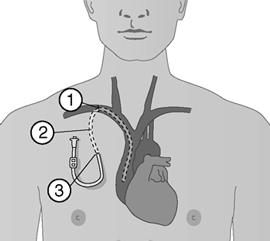
- Central line is inserted into your chest here
- The line is channelled under your skin
- It comes out here
CancerBACUP has a section that has more detailed information about chemotherapy.
Page last modified: 02 November 2005