Essential thrombocythaemia (ET)
This information is about essential thrombocythaemia (ET), also known as primary thrombocythaemia, which is one of a group of conditions known as the chronic myeloproliferative diseases (CMPDs).
The chronic myeloproliferative diseases
The myeloproliferative (pronounced mi low pro liff er a tiv) diseases are a group of conditions affecting the function of the bone marrow. They involve an over-production of one or more of the blood cells that are produced in the bone marrow. A small number of people with a CMPD will go on to develop a form of leukaemia.
The main types of chronic myeloproliferative disease are:
- essential thrombocythaemia (throm bo si theme ia)
- polycythaemia vera (polly si theme ia)
- chronic idiopathic myelofibrosis (i dio path ic my low fi bro sis)
Chronic myeloid leukaemia (CML) is also a chronic myeloproliferative disorder, though it is usually dealt with as a separate condition.
The bone marrow
The bone marrow is the spongy material in the centre of some of our bones. It produces cells known as stem cells. Stem cells are immature cells that develop into three different types of blood cells:
- Red blood cells carry oxygen to all cells in the body.
- White blood cells fight infection and form part of our immune system.
- Platelets help the blood to clot, to prevent bleeding.
Essential thrombocythaemia
ET is a chronic myeloproliferative disease affecting the cells in the bone marrow that produce platelets. ET is an uncommon condition that can affect people at any age, including children, although it is very rare in people under the age of 50. The cause is not known.
Signs and symptoms
Having too many platelets in the blood may not cause any symptoms and some people are found to have ET after they have had a routine blood test for another reason, when they have no symptoms.
A high number of platelets can cause the blood to clot more easily. It may also cause abnormal bleeding, because the platelets are immature and cannot function properly.
Symptoms can occur because a blood clot (thrombosis) has formed in a vein in the body. Clotting problems are more common in people over 60 years of age, or those who have already had a previous blood clot. The symptoms will depend upon where in the body a clot forms. Common sites for a clot to form are:
- The deep veins of the leg This can cause symptoms such as pain, swelling, heat and redness of a calf (known as deep vein thrombosis or DVT).
- The brain This may cause mild symptoms such as headaches, sight disturbances or dizziness. Blood clots in the brain may also cause symptoms that are more serious, such as a stroke or TIAs (transient ischaemic attacks [mini-strokes])
- The heart A blood clot in the heart may cause chest pain, and in severe cases can result in a heart attack.
- The lungs A blood clot in the lung may cause breathlessness and chest pain. This is known as a pulmonary embolism.
Problems caused by abnormal bleeding are less common than clotting problems. They can include:
- nosebleeds
- bruising
- abnormal vaginal bleeding
- bleeding gums.
If you develop any of these symptoms in between your check-ups you should discuss them with your doctor or haematologist. .
Diagnosis
ET is usually diagnosed by a haematologist (a specialist in blood disorders). Diagnosis is often made following a simple blood test called a full blood count. This counts the number of red cells, white cells and platelets. In ET there will be a high platelet count.
Other conditions can cause the platelet count to be increased, such as infection, arthritis, chronic bleeding or a lack of iron in the blood. These need to be ruled out before a diagnosis of essential thrombocythaemia can be made.
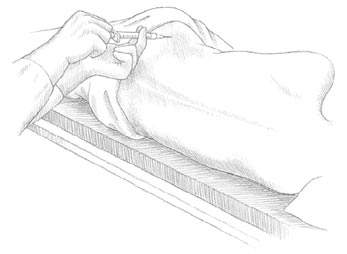
Bone-marrow aspirate This involves taking a sample of bone marrow from the back of the hipbone (pelvis) or occasionally the breast bone (sternum). The sample is then examined under a microscope to see if it contains any abnormal cells.
The bone-marrow sample is taken under a local anaesthetic. You are given an injection to numb the area and a needle is passed gently through the skin into the bone. A tiny sample of the marrow is then drawn (aspirated) into a syringe.
Treatment
The aim of treatment is to control the number of platelets and so reduce the risk of abnormal clotting or bleeding (and the associated complications). If treatment is successful, the outlook for someone with ET can be very similar to that of someone of the same age who doesn’t have the condition.
(If you have been diagnosed with an ET which is not causing any problems you may not need any treatment for a while. You will be seen by your doctor who will monitor your condition with regular blood tests.)
Aspirin is often used, as this can affect the way the platelets ‘stick’ together, which can help to reduce the risk of clotting. However, aspirin will not actually reduce the platelet count. One of the side effects of aspirin is an increased risk of bleeding and ulcers in the stomach. You will be advised to use other simple painkillers, like paracetamol, should you need them.
Chemotherapy Chemotherapy is the use of anti-cancer (cytotoxic) drugs to destroy cancer cells. It may be given to try and reduce the platelet count.
The main drug used is hydroxyurea (hi drox e u ria), which is given as a tablet. It can cause side effects, although generally these will be mild. These can include a lowered resistance to infection, anaemia, feeling sick, mouth ulcers and diarrhoea. It can also affect fertility, and people taking hydroxyurea are advised not to get pregnant or father a child, as there may be a risk to the developing foetus. It is therefore advisable to use adequate contraception while taking the drug and for a few months afterwards. If used over a long period of time, hydroxyurea may increase the chance of the ET developing into a leukaemia.
The chemotherapy drug busulphan (bu sul fan) may also be used. Busulphan is usually given as a tablet but can be given by injection into a vein. It can cause similar side efects to hydroxyurea.
Interferon-alpha Interferon is a protein that occurs naturally in the body. It can also be made as a drug. It is given to stimulate the body’s defence system and can help to slow down the production of platelets. Interferon is given as an injection under the skin, usually three times a week. Side effects include flu-like symptoms, dizziness and extreme tiredness (fatigue).
Anagrelide (an ag re lide) specifically reduces the number of platelets. It is given as a capsule. Side effects can include headaches and palpitations (sensation of a fast heartbeat). Anagrelide does not seem to affect fertility or increase the risk of the ET developing into leukaemia. The exact role of anagrelide in the treatment of ET is still being established and it is currently not licensed in the UK. As a result, it is only prescribed as part of a clinical trial, although in certain circumstances it may also be given to individual patients who have been selected by their doctor as suitable (this is called a ‘named patient’ basis).
Radioactive phosphorus (32P) may be used to treat ET. Radioactive phosphorus is given as an injection into a vein. It irradiates the bone marrow and can lower the number of platelets being produced.
Your doctor or nurse will explain your treatment to you and should answer any questions that you have.
Clinical trials
Research into new ways of treating essential thrombocythaemia is ongoing. Doctors use clinical trials to assess new treatments.
In the UK there are two research trials looking at the best way of treating ET. One trial compares the use of aspirin (alone) with a combination of aspirin and hydroxyurea. A second trial, called the MRC PT1 trial, is comparing aspirin with aspirin and hydroxyurea, or aspirin and hydroxyurea with aspirin and anagrelide.
You may be asked to take part in either of these trials.
Before any trial is allowed to take place, it must be approved by a research ethics committee, which protects the interests of those taking part. Before you enter a trial your doctor or research nurse must discuss the treatment with you so that you have a full understanding of the trial and what it means to take part. You may decide not to take part or to withdraw from the trial at any stage. You will then receive the best standard treatment available.
Follow-up
Your treatment may continue for a number of years and you will need to have regular check-ups and blood tests. These will probably be ongoing. If you have any problems, or notice any new symptoms in between these times, let your nurse or doctor know as soon as possible.
Your feelings and support
The need for practical and emotional support will of course be individual. Some people with ET may find that their life is not affected very much, but for others the condition may be a source of great fear and distress.
You may have many different emotions, including anger, resentment, guilt, anxiety and fear. These are all normal reactions and are part of the process many people go through in trying to come to terms with their condition and its treatment.
You don’t have to cope with these feelings on your own; people are available to help you. Some hospitals have their own emotional-support services, with specially trained staff, and some of the nurses will have received training in counselling. CancerBACUP can put you in contact with counselling services in your area.
References
This section has been compiled using information from a number of reliable sources including;
- Thrombocytosis and essential thrombocythaemia. Dr C Harrison and Prof S Machin. www.netdoctor.co.uk
- Wintrobe’s Clinical Haematology (11th edition). R Lee et al. Williams and Wilkins, 2004.
- Essential Haematology (4th edition). Hoffbrand et al. Blackwell Scientific Publications, 2001.
For further references, please see the general bibliography.
Page last modified: 29 November 2005