The vulva
The vulva is the area of skin between a woman’s legs and is made up of all the visible sex organs.
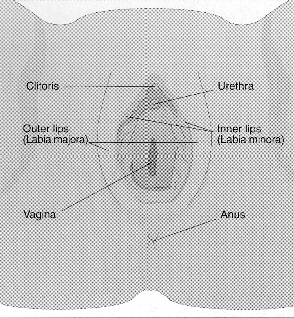
It consists of two outer lips (the labia majora) which are covered in pubic hair and surround two inner lips (the labia minora) which are thin and delicate. At the front of the vulva is the tiny structure that helps women reach a sexual climax (the clitoris). Just behind the clitoris is the opening through which women pass urine (the urethra), and just behind this is the birth canal (vagina). The opening to the back passage (anus) is close to, but separate from, the vulva. The area of skin between the vulva and the anus is called the perineum. All these structures are visible from outside the body.
In the groin – where the skin creases at the top of each leg – are glands called lymph glands, which are part of the lymphatic system. This system is an important part of the body’s natural defence against disease, and the lymph glands can become swollen when trying to deal with an infection or cancer.
Cancer of the vulva is very rare. It usually affects women between the ages of 55 and 75, but can occur in younger or older women. It is becoming more common in younger women.
Cancer of the vulva can occur on any part of the external female sex organs. The inner edges of the labia majora and the labia minora are the most common areas for it to develop.
Less often, cancer may also involve the clitoris or the Bartholin glands (small glands, one on each side of the vagina). It can also sometimes affect the perineum.
Page last modified: 02 November 2005