Vaginal cancer
The vagina
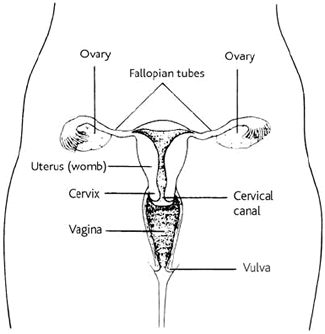
The vagina is the birth canal. It is a muscular tube that extends from the opening of the womb (cervix) to the folds of skin (vulva) between a woman’s legs.
It allows blood from periods (menstruation) to pass out of the body and is the passageway through which babies are born.
Cancer of the vagina
Cancers affecting the vagina are rare. Fewer than 300 women are diagnosed with this type of cancer each year in the UK.
There are two main types of vaginal cancer, those that start in the vagina itself (primary vaginal cancer) and those that spread into the vagina from another part of the body (secondary vaginal cancer).
Primary vaginal cancer
There are two main types of primary vaginal cancers and they are named after the cells from which they develop:
- Squamous cell The most common type of vaginal cancer is called squamous cell. This is usually found in the upper part of the vagina and most commonly affects women between the ages of 50 and 70.
- Adenocarcinoma This type of vaginal cancer usually affects women under 20 years of age but may occasionally occur in other age groups.
Other very rare types of vaginal cancer include melanoma, small cell carcinoma, sarcoma and lymphoma.
Secondary vaginal cancer
Secondary cancers in the vagina are more common than primary vaginal cancer and usually come from the neck of the womb (the cervix), the lining of the womb (the endometrium) or from nearby organs such as the bladder or bowel.
This information is about primary vaginal cancer. CancerBACUP’s nurses can give you further information about secondary cancers in the vagina.
Causes
As with many cancers, the exact cause of most vaginal cancers is unknown, but research is going on all the time to try to find the cause.
A hormone drug called diethystilboestrol (DES) has been identified as a cause of a particular type of adenocarcinoma of the vagina. Between 1940 and 1970, DES was prescribed to pregnant women to try to prevent miscarriages. The female children of women who took DES during pregnancy have an increased risk of developing a type of adenocarcinoma of the vagina called clear cell adenocarcinoma (CCA). Although DES and some other female hormones (oestrogens) can be safely used to treat some other medical conditions, DES is no longer used during pregnancy.
Women who have had genital warts caused by the human papilloma virus (HPV) have a slightly higher risk of developing vaginal cancer. Women who have had radiation treatment (radiotherapy) to the pelvic area also have a slightly higher risk, but this complication of radiotherapy is very rare and women who have had this treatment still only have a tiny risk of developing vaginal cancer.
Signs and symptoms
The most common symptoms of vaginal cancer are a blood-stained vaginal discharge, bleeding after sexual intercourse and pain. Problems with passing urine, such as blood in the urine, the need to pass urine frequently and the need to pass urine at night, can also occur. Pain in the back passage (rectum) may sometimes occur.
How it is diagnosed
Usually you will begin by seeing your family doctor (GP), who will refer you to a specialist doctor for tests and for expert advice and treatment. The following tests are commonly used to diagnose vaginal cancers:
Internal vaginal examination At the hospital, the specialist doctor will do a full pelvic examination. This will include examining the inside of your vagina to check for any lumps or swellings. The doctor will also feel your groin and pelvic area to check for any swollen glands and may also check your back passage (rectum).
Cervical smear You may have a smear or liquid-based cytology test to see if there are any abnormalities in the cells of the cervix.
The person taking the smear should explain the procedure and you should feel able to ask questions at any time. Once you are lying comfortably on the couch, the doctor or nurse will gently insert an instrument called a speculum into the vagina to keep it open while the smear is taken. A small disposable spatula or brush is then used to take a sample of cells from the cervix. The cells are then either placed on a glass slide, or put into a liquid, and sent to the laboratory for examination under a microscope.
Colposcopy This is a closer examination of the vagina using a colposcope, which is a small low-powered microscope. The colposcope acts like a magnifying glass so the doctor or specialist nurse can see the whole vagina in more detail.
The doctor will use a speculum in the same way as for a smear test, to hold the vagina open. The vagina may then be painted with a liquid that makes any abnormal areas show up more clearly. Colposcopy is usually carried out in the hospital outpatient department and takes about 10–15 minutes. It is not usually painful but may be uncomfortable.
Biopsy A small sample of tissue will be taken from any abnormal areas. This sample will be examined under a microscope.
VAIN
The above tests may show early cell changes in the vagina known as vaginal intraepithelial neoplasia or VAIN. This is sometimes referred to as carcinoma-in-situ. VAIN is not cancer and therefore the treatment for this condition is not the same as for cancer. If you would like more information about VAIN you can contact CancerBACUP.
Further tests
If the above tests show that you have a vaginal cancer, further tests may be necessary to find out whether any cancer cells have spread. Cancer can spread in the body, either in the bloodstream or through the lymphatic system. The lymphatic system is part of the body’s defence against infection and disease. The system is made up of a network of lymph glands (also known as lymph nodes) that are linked by fine ducts containing lymph fluid. The results of these tests will help the specialist to decide on the best type of treatment for you.
Chest x-ray and blood tests These are necessary to assess your general health and to check whether there is a possibility of the cancer having spread to the lungs.
CT (computerised tomography) scan A series of x-rays builds up a three-dimensional picture of the inside of the body. It may be used to see if the cancer has spread to other parts of the body. Before having the scan you will be given an injection of a substance that will help to make the pictures clearer.
MRI (magnetic resonance imaging) scan This type of scan uses magnetic fields instead of x-rays to form a series of pictures of the inside of the body. The scan can take up to an hour and is completely painless. As the scanner is magnetic you will be asked to remove anything metal such as a watch or jewellery before entering the scanning room. If you have had a hip or knee replacement, or have a heart pacemaker, it is important to tell the person doing the scan before you go into the scanning room.
The scanner is noisy so you will be given earplugs or headphones to protect your ears. Some people find the scanner claustrophobic.
Staging
The ‘stage’ of a cancer is a term used to describe its size and whether it has spread beyond its original site. Knowing the particular type and the stage of the cancer helps the doctors to decide on the most appropriate treatment.
- Stage 1 The cancer is only in the vagina and has not begun to spread.
- Stage 2 The cancer has begun to spread through the wall of the vagina, but has not spread to the bones of the pelvis.
- Stage 3 The cancer has spread to the pelvis and may also be in the lymph nodes close to the vagina.
- Stage 4 The cancer has spread to the bladder or the bowel or to other parts of the body, such as the lungs.
If the cancer comes back after initial treatment, this is known as recurrent cancer.
Grading
‘Grading’ refers to the appearance of the cancer cells under the microscope and gives an idea of how quickly the cancer may develop. Low-grade means that the cancer cells look very like normal cells, they are usually slow-growing and they are less likely to spread. In high-grade tumours the cells look very abnormal, are likely to grow more quickly and are more likely to spread.
Treatment
The treatment for vaginal cancer depends on a number of factors including your age, general health and the stage, grade and type of cancer.
Radiotherapy, surgery and chemotherapy may be used to treat cancer of the vagina. You may have one, or a combination, of these treatments.
Before starting treatment you should be given a chance to ask your cancer specialist any questions you have about the treatments being considered. It is important to ask the specialist to explain things more than once if there is anything you do not understand, however insignificant it may seem.
Radiotherapy
For many women with cancer of the vagina, radiotherapy is the most suitable treatment. In some younger women, radiotherapy may be combined with chemotherapy, which is known as chemo-radiotherapy.
Radiotherapy treats cancer by using high-energy rays (radiation) that destroy the cancer cells while doing as little harm as possible to normal cells. It is given in the radiotherapy department at the hospital.
Your treatment will be planned by a doctor who is a specialist in radiotherapy treatment (known as a clinical oncologist or radiotherapist). They will be able to discuss the treatment with you and answer any questions you may have. The treatment will be given by a radiographer.
Radiotherapy can be given from an external machine and is known as external radiotherapy. Sometimes internal radiotherapy is used. Some women have both external and internal radiotherapy treatment.
The dose needed will depend on the exact type of cancer and whether it has spread into surrounding tissue, so you may find that you are having a different radiotherapy treatment from other women you meet at the hospital.
External radiotherapy This involves beams of radiation being directed at the cancer from outside the body – a bit like having an x-ray. While having external radiotherapy, you will be asked to visit the radiotherapy department for treatment every weekday for 4–6 weeks. Each treatment takes several minutes and is painless.
Internal radiotherapy This involves an applicator (similar to a tampon) containing a radioactive substance being inserted into your vagina. The treatment may last several hours or a few days. If your cancer specialist recommends internal radiotherapy for you, you may find it helpful to ask the staff in the radiotherapy department to explain what will happen and to show you the equipment beforehand.
Sometimes, as well as the applicator, tiny radioactive needles may be placed into the area surrounding the vagina. If these are needed they are put in under general anaesthetic and are removed once the treatment ends.
Side effects of radiotherapy
Radiotherapy for vaginal cancer can cause short-term and long-term side effects. The most common effects happen during or soon after treatment. The side effects happen because, as well as destroying cancer cells, radiotherapy can also damage the healthy cells nearby.
Short-term side effects It is not unusual to have slight bleeding or discharge from the vagina once the radiotherapy treatment has ended. If it continues for more than a few weeks, or becomes heavy, it is important to let your doctor or nurse know.
Radiotherapy to the pelvic area can cause side effects such as tiredness, diarrhoea and a burning sensation when passing urine (cystitis). These side effects can be mild or more troublesome depending on the strength of the radiotherapy dose and the length of your treatment. Your oncologist will be able to advise you what to expect.
Most of these side effects can be treated with medicines and your oncologist will be able to help you. Any side effects should gradually disappear once your treatment is over.
It is important that you drink plenty of fluids and maintain a healthy diet during your treatment. If your diarrhoea is not controlled, let your doctor know so that anti-diarrhoea medicines can be prescribed. You may feel sick but this is not common. If you don’t feel like eating you can replace meals with nutritious high-calorie drinks, which are available from most chemists and can be prescribed by your GP. It may help to talk to a dietitian at the hospital.
Unfortunately, radiotherapy for cancer of the vagina affects the ovaries and this brings on the menopause, usually about three months after the treatment starts. This means that your periods will stop and you will have menopausal side effects such as hot flushes, a dry skin and possibly loss of concentration. Some women become less interested in sex and notice that their vagina is dry. Sometimes, radiotherapy causes a narrowing of the vagina, which can make sexual intercourse uncomfortable. See below for advice on how to deal with the effects on your sex life.
You can be protected from menopausal symptoms by taking HRT (hormone replacement treatment) with tablets or skin patches. Your gynaecologist can start these during the radiotherapy treatment or shortly after it has ended. They will choose the correct replacement hormones and dosage for you.
It is important to get as much rest as you can, especially if you have to travel a long way for treatment each day.
Possible long-term side effects Radiotherapy to the pelvic area can sometimes lead to long-term side effects. However, improvements in the planning of your treatment and the way in which the radiotherapy is given have made these long-term effects much less likely.
In a small number of people, the bowel or bladder may be permanently affected by the radiotherapy. If this happens, the increased bowel motions and diarrhoea may continue, or you may need to pass urine more often than before. The blood vessels in the bowel and bladder can become more fragile after radiotherapy treatment and this can cause blood to appear in the urine or bowel movements. This can take many months or years to occur. If you notice any bleeding, it is important to let your doctor know, so that tests can be done and appropriate treatment given.
Some people also find that the radiotherapy affects the lymph glands in the pelvic area and can cause swelling of the legs. This is known as lymphoedema and is more likely if you have had surgery as well as radiotherapy.
Surgery
Sometimes the cancer needs to be removed in an operation (surgery). The type of surgery you will have depends on the size and position of the cancer.
It may be possible to have an operation to remove the cancer together with some of the surrounding normal tissue. Depending on the amount removed, the remaining vagina may be able to stretch so that you may still be able to have sexual intercourse.
Some women may need to have a larger operation which removes the whole of the vagina (vaginectomy). Sometimes it is possible to make a new vagina (vaginal reconstruction) using tissue from other parts of the body. Your doctors and nurses caring for you will make sure that you receive information and support about your surgery.
It may also be necessary to remove the womb (uterus), cervix, ovaries and fallopian tubes. This operation is called a radical hysterectomy. During this operation some of the lymph nodes in the pelvis may also be removed.
Chemotherapy
Chemotherapy is the use of anti-cancer (cytotoxic) drugs to destroy cancer cells. They work by disrupting the growth and division of the cells. The chemotherapy is usually given directly into a vein (intravenously). Chemotherapy is mainly used to treat advanced vaginal cancers or cancer that has returned after initial treatment.
Will the treatment affect my sex life?
How your sex life is physically affected will depend upon the treatment you have. If you have to have your cervix and uterus removed and have a vaginal reconstruction, it may not be possible to have a vaginal orgasm. However, surgery to the vagina does not affect the clitoris so it will be possible to have an orgasm through oral sex and masturbation.
If you are having radiotherapy, the side effects may make sexual intercourse uncomfortable and undesirable both to you and your partner. Although you may not feel like having sexual intercourse, you and your partner can continue to share your feelings and be intimate and close in other ways, such as cuddling, massage, kissing and stroking.
Radiotherapy causes shortening and narrowing of the vagina, and to prevent this you will be advised by your doctor or gynaecology nurse to use a dilator (a plastic or glass tube) each day during and for some time after the treatment. The dilator is gently inserted into the vagina to keep it open.
Feelings and emotions
You may find it hard to believe that you need this sort of treatment. Most women feel shocked and upset by the idea of having treatment to the most intimate and private parts of their body. You may experience a wide variety of emotions including anger, fear and resentment, all of which are normal. When these strong feelings are combined with the trauma of surgery, as well as all the emotions that go with having a cancer diagnosis, you may find the normal closeness of your relationship is also affected. Sharing your feelings may help bring you and your partner closer together.
Everyone has their own ways of coping with difficult situations. Some people find it helpful to talk to friends or family, while others prefer to seek help from people outside their situation, such as a specialist nurse or counsellor. Others prefer to keep their feelings to themselves. There is no right or wrong way to cope, but help is available if you need it. It is important to give yourself and your partner time to deal with the emotions and feelings that cancer can cause.
CancerBACUP has information on the emotional effects of cancer, which discusses the feelings and emotions that you may have, and advises on support services that can help.
References
This section has been compiled using information from a number of reliable sources including;
- Oxford Textbook of Oncology (2nd edition). Souhami et al. Oxford University Press, 2002.
- Cancer and Its Management (4th edition). Souhami and Tobias. Oxford Blackwell Scientific Publications, 2003.
- The Textbook of Uncommon Cancers (2nd edition). Raghavan et al. Wiley, 1999.
- Principles & Practice of Gynaecologic Oncology (3rd edition). Hoskins et al. Lippencott Williams and Wilkins, 2000.
For further references, please see the general bibliography.
Page last modified: 02 November 2005
- Q&As
- Related information
- Current clinical trials