The bones of the human body
The human body is made up of over 200 bones of different shapes and sizes.
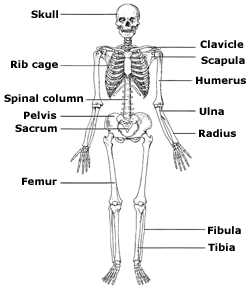
Bone is a living tissue consisting of calcium and various proteins which make the bone strong and rigid. It also contains living cells which continuously break down and remove old bone and replace it with new bone to maintain the bones’ strength.
Each bone consists of a compact outer shell and a spongy inside. The inside contains the bone marrow which produces blood cells.

Each bone consists of a compact outer shell and a spongy inside. The inside contains the bone marrow, which produces blood cells.
The joints of the bones are covered in cartilage – a tough, flexible material, rather like gristle. As cartilage is more elastic than bone, it allows the bones to move freely at the joints. It also cushions the bones at the joint to stop them rubbing against each other.
The bones have several important functions. The skeleton gives the body rigid support and the joints act as levers so that the body can move. They protect organs in the body; for example, the rib cage protects the heart and lungs, and the skull protects the brain. The bones also store some of the body’s essential minerals, especially calcium.
Although a secondary bone cancer can occur in any bone in the body, the most commonly affected bones are those of the spine, ribs, pelvis, skull and the upper bones of the arms (humerus) and the legs (femur).
Page last modified: 11 November 2005