The bladder
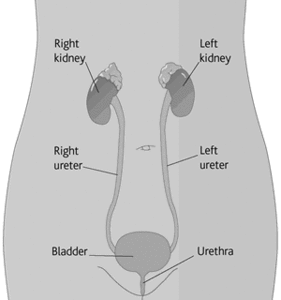
The bladder is a hollow, muscular, balloon-like organ that collects and stores urine. It is in the lower part of the abdomen (the pelvis). Urine consists of water and waste products not needed by the body.
The bladder is lined with a urine-proof membrane which stops the urine being absorbed back into the body. The cells of this membrane are called transitional cells or urothelial cells, and the lining membrane is called the urothelium.
The two kidneys produce urine, which is carried to the bladder by two tubes called ureters. The bladder then stores the urine. When the bladder is full enough, nerve signals are sent to the brain. To get rid of the urine, the muscle of the bladder is then contracted to force the urine out of the body through a tube called the urethra.
In women the urethra is a very short tube in front of the vagina (birth canal). In men the tube is a longer one that passes through the prostate gland and the penis.
Page last modified: 02 November 2005