The myelodysplastic syndromes
This information is about a group of conditions known as the myelodysplastic syndromes. They are a group of disorders affecting the bone marrow. They are not types of cancer, although in a small number of people they can develop into a particular form of leukaemia. However, the symptoms are often very similar to those caused by cancer and the treatments used are also similar.
The bone marrow
The bone marrow is the spongy material in the centre of some of our bones. It produces cells known as stem cells. Stem cells are immature cells that develop into the three different types of blood cells.
- Red blood cells, which carry oxygen to all cells in the body.
- White blood cells (including plasma cells), which are essential for fighting infections.
- Platelets, which help the blood to clot, to prevent bleeding.
The myelodysplastic syndromes
Myelodysplasia (pronounced my low dis play sia) is an abnormality of the bone marrow which gradually affects the production of healthy blood cells. There are different subtypes of myelodysplasia that are classified depending on which cell is affected and how this affects the bone marrow or blood. The five main subtypes are:
- refractory anaemia (RA)
- refractory anaemia with ring sideroblasts (RARS)
- refractory anaemia with excess blasts (RAEB)
- refractory anaemia with excess blasts in transformation (RAEB-t)
- chronic myelomonocytic leukaemia (CMML).
The myelodysplastic syndromes are often separated into either low- or high-risk disease depending upon the number of abnormal cells that are seen in the bone marrow and how the disease is affecting you.
In low-risk (or low-grade) disease the bone marrow is only slightly affected and the disease develops quite slowly.
In high-risk (high-grade) disease the bone marrow is more widely affected and the disease can develop more quickly.
Whether the illness is low-grade or high-grade will affect decisions about treatment.
Causes of myelodysplasia
Most cases of myelodysplasia have no known cause and are called primary myelodysplastic syndrome.
In a small number of people, a myelodysplastic syndrome occurs as a result of previous treatment with either chemotherapy or radiotherapy. This is known as therapy-related or secondary myelodysplastic syndrome.
The myelodysplastic syndromes are more common in elderly people but can occur at any age. They are very rare in childhood.
Signs and symptoms
The main symptoms of myelodysplasia include anaemia (feeling tired and sometimes breathless), repeated infections and bruising or bleeding. The symptoms occur due to low levels of healthy red blood cells, white blood cells and platelets. It is not unusual for myelodysplasia to be discovered during a routine blood test when the person has no symptoms.
A small number of people will have an enlarged spleen. The spleen is part of the body’s defence against infection and is found on the left side of the abdomen, just under the lower ribs.
How it is diagnosed
The diagnosis is usually made by a haematologist (a doctor specialising in conditions of the blood) using a blood test known as a full blood count, and a bone-marrow biopsy and aspiration (see below).
A full blood count measures the number of blood cells (of all different types) in the blood.
A bone-marrow biopsy involves taking a sample of bone marrow from the back of the hipbone (pelvis) or occasionally the breast bone (sternum).
The bone-marrow sample is taken under a local anaesthetic. You are given a small injection to numb the area and a needle is passed gently through the skin into the bone.
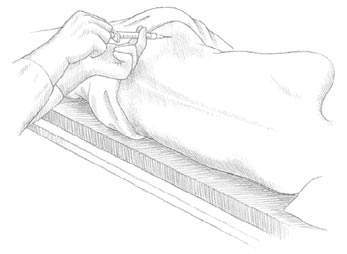
A tiny sample of the marrow is then drawn, or aspirated, into a syringe. Sometimes a small core of marrow is also needed (a trephine biopsy, also known as an aspiration) and this takes a few minutes longer. This procedure should not be painful, although you may feel some discomfort and pressure.
The bone marrow is looked at under a microscope by a haematologist to see if it contains any abnormal cells.
Treatment
The type of treatment that is most appropriate will depend upon your age and general health as well as the type of myelodysplasia and how it is affecting you.
As the condition generally develops very slowly, the aim of treatment for most people is to control the disease and improve any symptoms, such as tiredness and breathlessness. Treatment may also help to prolong survival.
For a small number of people it may be possible for a stem-cell transplant to be given, with the aim of curing the disease.
Low-risk myelodysplastic syndromes
Some people with low-risk disease and no symptoms may initially not need any treatment.
Supportive treatment
When symptoms, such as anaemia, bruising and bleeding or repeated infections do occur, they are caused by low levels of healthy cells in the blood. Drips (transfusions) of blood or platelets can be given to help improve symptoms. Antibiotics may also be needed to treat or prevent infection. This is often known as supportive treatment.
If you have many blood transfusions over many months there is a small risk of overloading the body with iron. This is because each bag of blood contains red blood cells, and red blood cells contain iron. An iron overload can be harmful and treatment may be needed to reduce the amount of iron in the body. Your doctor or nurse will explain more about this treatment, if you need to have it.
It may be possible to boost the number of healthy red and white cells by having growth factors. The drugs G-CSF (which can boost the number of white cells) and erythropoietin (which helps to boost the number of red cells) are usually given as injections under the skin (subcutaneously). Unfortunately these treatments may not be effective for everyone who has myelodysplasia.
Stem-cell transplants
Stem cell transplantation may be a suitable treatment for a small number of people with myelodysplasia. This treatment is generally only for younger patients, as the treatment is very intensive and the risks involved with a transplant increase as you get older.
Transplants are usually considered for people younger than 50–55 who have a brother or sister who can donate matching stem cells for them. This treatment usually involves high doses of chemotherapy or radiotherapy to destroy the unhealthy bone marrow. Healthy stem cells are then given into the blood through a drip. The stem cells make their way into the bone marrow and start to produce red and white cells, and platelets again.
High-risk myelodysplastic syndromes
Some people with high-risk myelodysplasia may only need supportive treatment to help improve any symptoms caused by low blood counts. Other people may need chemotherapy and again it may be possible for a small number of people to have a stem-cell transplant.
Chemotherapy
Chemotherapy is the use of anti-cancer (cytotoxic) drugs to destroy cancer cells. It can either be given as tablets or capsules, or as an injection into a vein (intravenously). The treatment may involve just one type of chemotherapy or a combination of drugs. It is given to help control the disease and any symptoms. Treatment can often be given to you as an out-patient, but may require a short stay in hospital.
Stem cell transplants
Stem cell transplants may be used to treat some younger people with high-grade myelodysplasia, as described above.
Immunosuppression therapy
In some situations you may be given the immunosuppressant drugs cyclosporine or anti-thymocyte globulin (ATG). Immunosuppressant drugs can suppress the immune system and may help to increase the number of blood cells produced in the bone marrow. They may also help to control the progression of the myelodysplasia. Your doctor can advise whether these drugs would be suitable for you.
Clinical trials
A number of new treatments for myelodysplasia are currently being researched, and you might be invited by your doctor to take part in a clinical trial. Your doctor must discuss the treatment fully with you and have your informed consent before entering you into any clinical trial.
Currently in trial are the drugs 5-azacitidine and decitabine. They may help to control the myelodysplasia and improve symptoms.
CancerBACUP has a section on cancer research trials (clinical trials) which you may find helpful.
Support
It is often difficult to find information and support when you are diagnosed with a condition such as myelodysplasia. You may have concerns about your treatment and how effective it might be. It is important to discuss these concerns with the doctors and nurses caring for you.
You may experience many different emotions including anxiety and fear. These are all normal reactions and are part of the process that many people go through in trying to come to terms with their condition. Many people find it helpful to talk things over with their doctor or nurse. Close friends and family members can also offer support.
Each person’s need for information and support will of course be individual. If you need further information about the myelodysplastic syndromes, the treatment, controlling symptoms, or the practical and emotional problems that these illnesses can cause, please contact CancerBACUP’s Cancer Support Service.
References
This section has been compiled using information from a number of reliable sources including;
- Essential Haematology (4th edition). Hoffbrand, Pettit and Moss. Blackwell Scientific Publications, 2001.
- The ABC of Clinical Haematology (2nd edition). Drew Provan (Ed). BMJ Books, 2002.
For further references, please see the general bibliography.
Page last modified: 02 November 2005