The prostate
The prostate is a small gland found only in men. It is the size of a walnut and surrounds the first part of the tube (urethra) which carries urine from the bladder to the penis.
The prostate produces a thick white fluid called semen which mixes with the sperm produced by the testes. It also produces a protein called prostate-specific antigen (PSA) that turns the semen into liquid. The gland is surrounded by a sheet of muscle and a fibrous capsule.
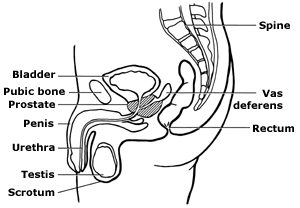
The growth of prostate cells and the way the prostate gland works is dependent on the male sex hormone, testosterone, which is produced in the testicles.
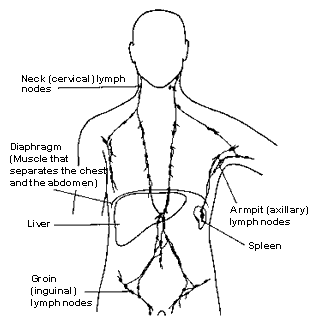
The rectum (back passage) is close to the rear part of the prostate gland. Near to the prostate are collections of lymph nodes. These are small glands, about the size of a bean.
Page last modified: 02 November 2005