Loss of speech & voice restoration
Not being able to speak is a great loss for anyone who has had a laryngectomy. However, there are several methods to help people with a laryngectomy to produce sound and learn to speak again.
A speech therapist will usually visit you before your operation to discuss the different ways of communicating. The method you use will depend on the type of surgery you have and on your individual circumstances, such as the type of work you do and what you yourself prefer. Some of the types of voice restoration are:
Voice prosthesis
During the laryngectomy operation, a channel (fistula) is made through the wall between the windpipe and the gullet. A valve (voice prosthesis) is inserted into the opening. When you breathe out and cover the stoma with a thumb or finger, air from the lungs is pushed through the valve to produce speech.
The valve also prevents food and fluids from passing into the windpipe. It may take a while to learn how to speak with a voice prosthesis. The voice can sound quite natural, although in women it is usually a lower pitch than before the operation.
There are several types of valve. The most common examples are BlomSinger, Provox and Groningen valves.
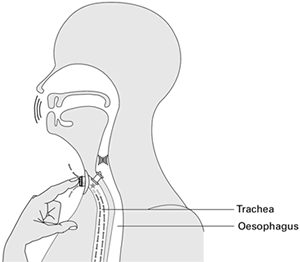
Oesophageal speech
Another method is a technique known as oesophageal speech. As soon as you have recovered from a laryngectomy, you can be taught to use this technique. Air is swallowed and pushed into the gullet (oesophagus). As the air is forced out from the gullet, it vibrates the gullet walls, which makes a low-pitched sound. Movements of the lips, cheeks and tongue turn the sound into words.
Some people find it easy to make oesophageal speech, or use a voice prosthesis , but other people find it more difficult. It is usually best to practise little and often – 10 minutes an hour throughout the day is enough at first. Don’t aim to get louder until you can make yourself understood in a quiet voice. It helps to try and get all the consonants in words as clear as possible and to make your lips easy to read.
At least two-thirds of people with a laryngectomy are able to use a voice prosthesis or oesophageal speech. Some people can go back to jobs which need a lot of talking: for example, telephone operators and salespeople.
Electropharynx
Several types of mechanical aid available to help produce an artificial voice. You may be given an aid of some kind while in hospital, to use while you practise developing a good voice. The aids are electronic devices which are placed under the chin and make sound vibrations in the mouth that can be formed into speech.
To use an aid properly or to have good oesophageal speech takes training from a speech therapist, and plenty of practice, but it is well worth the effort.
Most people with a laryngectomy can learn to speak effectively using one of the techniques described above. Some people also like to use small typewriters to communicate with the people around them. Several different types of writing device are available.
Page last modified: 02 November 2005
- Q&As