Radiotherapy as a treatment for secondary bone cancer
External beam radiotherapy
Radiotherapy is the use of high-energy rays to destroy cancer cells, while doing as little harm as possible to normal cells. It is the most common type of treatment for secondary bone cancer as it is very effective for relieving symptoms such as pain or swelling.
Radiotherapy can be given in different ways. Sometimes a single dose is given. This has the advantage of needing only one visit to the radiotherapy department. Sometimes, your treatment may be divided into a number of sessions. Each session is known as a fraction.
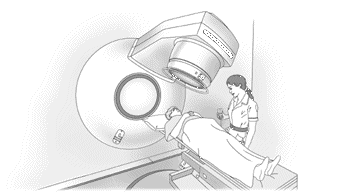
The way in which your treatment is given will depend on the type of cancer, its position in the body and also upon the radiotherapy department at the hospital. Your doctor will discuss your treatment with you beforehand and answer any questions that you have.
Radiotherapy is normally given to the area of the bone affected by the cancer, to relieve pain or swelling. However, if the cancer is in several areas of bone it may be necessary to give radiotherapy to a larger area. This may be referred to as hemibody irradiation, which means treating half the body.
It usually takes from 7-10 days for the radiotherapy to start reducing the pain and it can take up to 6 weeks before the full effect is felt. You may notice that the pain becomes slightly worse before getting better. During this time it is important to continue taking the painkillers prescribed by your doctors. As the pain improves, it may be possible to reduce the amount of painkillers you are taking. It is a good idea to discuss this with your doctor or nurse before adjusting the dose.
Usually this type of radiotherapy causes very few side effects. However, treating bones in certain areas of the body, such as the ribs or the spine, may cause some sickness for a day or so after the treatment. This can usually be prevented by taking anti-sickness tablets.
Radioisotopes
Radioisotopes are mildly radioactive substances. Some radioisotopes are taken up (absorbed) by bone and are sometimes used to treat secondary cancers in the bone. The radioisotope is a liquid that is injected into a vein, usually in the arm.
The radioisotope travels through the bloodstream to the bones, where it gives a dose of radiotherapy to the areas affected by the cancer cells. This can help to improve pain, often within a number of days.
The advantage of radioisotope treatment is that all the bones in the body affected by cancer will be treated. This makes it an ideal treatment if you have a number of bones affected. However, it is only suitable for treating secondary cancers (secondaries) from certain types of primary cancer. For instance:
- An injection of strontium89 (Sr89) may be used to treat secondaries from cancer of the prostate or breast.
- Secondaries from cancer of the thyroid may be treated with iodine131.
Other radioisotopes such as samarium153 (Sm153 EDTMP) and rhenium188 (Re188) are also used occasionally. These radioisotopes are used to treat secondaries from a variety of primary cancers, such as breast and colon, and are given as a drip (intravenously).
Strontium89 A single injection is given through a small tube (a cannula) inserted into a vein. Pain caused by the cancer cells is normally reduced several weeks after the injection. In most people the pain relief lasts for several months. People are normally given treatment as an outpatient and it may sometimes be repeated if the pain comes back. After this treatment, it is safe to be with other people, including children. However, as your urine and blood will be very slightly radioactive for about seven days, you will be given some advice to follow before you go home, such as avoiding spills.
Iodine131 Iodine131 treatment is given as a treatment for bone secondaries from thyroid cancer. The iodine is given as a capsule that is swallowed or as an odourless and colourless drink. If the iodine is used as a treatment for other types of cancer, or if the iodine is attached to another chemical, it is likely to be given as a drip (intravenously) over a period of up to one hour.
The radioactivity in iodine131 breaks down slowly and so you will need to stay in hospital in a single room for a few days until the radioactivity reduces to a safe enough level to allow you to mix with other people.
You may also need to take some special precautions for a short time after going home – the hospital staff will explain these to you. The radioactivity causes no ill effects on the body.
Side effects
- Radioisotopes such as strontium89 can temporarily reduce the number of normal red and white blood cells produced by the bone marrow. When the number of white blood cells is reduced, you are more likely to get an infection. If necessary, you will be given antibiotics to treat any infection. If the number of red blood cells is low (anaemia) you may tire easily. If the number of red blood cells is very low you may be given a blood transfusion.
- Tumour flare may occur – this is a swelling around the tumour area in the days following treatment. It can cause a temporary increase in pain and tenderness and you may need to take painkillers for a few days, but the pain and tenderness will gradually reduce.
Page last modified: 06 February 2006
- Q&As
- Related information
- Resources