The thyroid gland
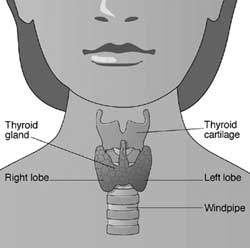
The thyroid is a small gland in the front of the neck just below the voice box (larynx), and is made up of two parts, or lobes. It is one of a network of glands throughout the body that make up the endocrine system. This system is responsible for producing the body’s hormones that help to control and influence various functions. The thyroid is sometimes known as the ‘activity’ gland because it produces the two main hormones, thyroxine (T4) and triiodothyronine (T3), which are needed to keep the body functioning at its normal rate. The thyroid gland needs a regular supply of iodine (which is added to table salt and found in fish and milk) in order to produce thyroxine.
If the blood levels of T3 and T4 fall, the hypothalamus (a part of the brain) sends out thyroid-releasing hormone (TRH) into the blood. As the levels of TRH in the blood rise, the pituitary gland releases thyroid-stimulating hormone (TSH) which stimulates the thyroid to produce more thyroid hormones.
If the thyroid gland doesn’t produce enough hormones you will feel tired and lethargic and put on weight easily. This is called hypothyroidism, or myxoedema. If the thyroid gland produces too much hormone you will lose weight, have an increased appetite, feel shaky and anxious, or have palpitations. This is known as hyperthyroidism, or thyrotoxicosis.
Page last modified: 02 November 2005